
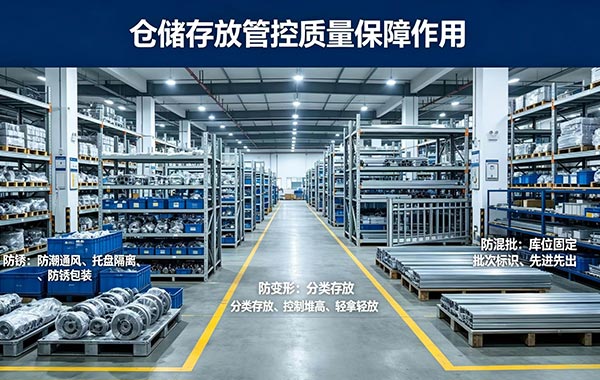
Warehouse management is an important part of the manufacturing quality chain that can easily be overlooked. Improper long-term storage of raw materials, semi-finished products, and finished products may lead to corrosion, dust contamination, deformation under load, batch mixing, and excessive inventory aging. These issues can result in quality problems before shipment, inventory losses, and reduced delivery reliability while increasing overall production costs.
Standardized quality control measures should therefore be implemented for the storage of raw materials, semi-finished products, and finished products:
- 1. Implement Segregated Storage and Batch Control: Raw materials, semi-finished products, finished products, and reworked products should be stored in designated areas according to their status. Materials and components of different part numbers, batches, and material grades should be stored separately with clear and complete identification. This helps reduce the risk of batch mixing, material mix-ups, and incorrect materials entering subsequent production or shipment.
- 2. Strengthen Moisture and Corrosion Protection: Warehouses should be kept dry, well ventilated, and clean, with standing water and localized damp conditions avoided. Precision steel components and parts susceptible to corrosion should be protected according to their material characteristics and expected storage period. Appropriate measures may include rust preventive oil, corrosion-resistant paper, and sealed packaging to reduce the risk of oxidation, discoloration, and rust formation during long-term storage.
- 3. Control Stacking and Storage Methods to Prevent Deformation: Stacking height and load should be properly controlled to avoid excessive weight or pressure on stored products. Slender components, thin-walled parts, and sheet-like components should be stored using appropriate layered supports, restraints, or dedicated fixtures. This helps prevent bending, deformation, and edge damage caused by prolonged loading or inadequate support and ensures that dimensional and surface requirements are maintained during storage.
- 4. Strictly Apply the First-In, First-Out Principle: The First-In, First-Out (FIFO) principle should be applied based on receiving dates and batch information, with earlier batches used or released first whenever applicable. This helps prevent quality deterioration caused by prolonged storage, such as corrosion, failure of protective measures, or changes in product condition, while reducing quality risks and losses associated with excessive inventory aging.
- 5. Conduct Regular Inventory Inspection and Maintenance: Stored materials and products should be inspected, counted, and organized at defined intervals, with particular attention to corrosion, contamination, deformation, and long-term inventory. Any abnormal products should be clearly identified, segregated, and evaluated before further use or shipment. Rust prevention measures should also be renewed or supplemented when necessary to maintain stable product quality throughout the storage period.
Proper warehouse management can effectively reduce quality risks associated with long-term storage, including corrosion, deformation, contamination, and batch mixing, providing reliable support for consistent product quality and stable delivery performance.