
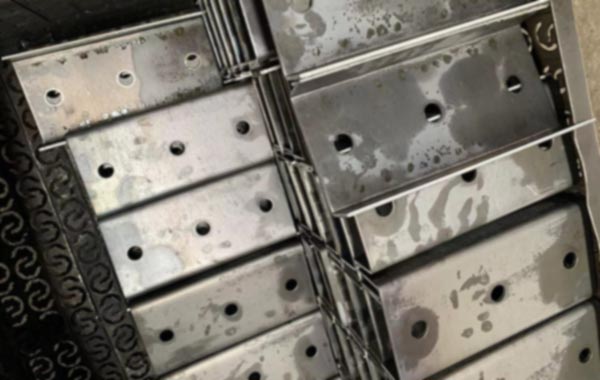
1. Main Factors Affecting Springback:
- Material Properties: Material yield strength, elastic modulus, and strain-hardening behavior directly determine the magnitude of springback.
- Sheet Thickness and Geometry: Thin sheets are more prone to springback than thick sheets. Complex bending radii and cross-sectional geometries cause non-uniform stress distribution, which increases springback.
- Process Parameters: Forming speed, blank-holder force, and lubrication conditions influence material flow and residual stress distribution, thereby indirectly affecting springback.
- Die Structure and Clearance: Excessive die clearance or insufficient compensation in die design can result in final forming angles or curvatures deviating from design requirements.
2. Common Methods for Springback Compensation:
- Die Compensation Design: Introducing reverse deformation, such as overbending or curvature compensation, to offset springback is the most commonly used and effective method.
- Increasing Blank-Holder Force or Forming Force: Enhancing plastic deformation during forming reduces residual stresses and consequently lowers springback.
- Process Path Optimization: Applying multi-step bending or combined deep-drawing and bending processes improves stress distribution and enhances forming stability.
- Material Pretreatment: Pre-stretching or heat treatment of certain materials can reduce yield point elongation and improve processing consistency.
- Digital Simulation and Validation: Using CAE simulations to predict springback behavior enables early optimization of die design and process parameters, significantly improving tryout efficiency.
Systematic analysis of springback influencing factors and the application of appropriate compensation strategies can significantly improve dimensional accuracy and consistency of stamped parts, reduce die tuning time, and ensure stable quality in mass production.