
In machining operations, human error is one of the important factors that can lead to batch defects, dimensional deviations, surface defects, and missed quality issues. Common causes include misinterpretation of drawings, insufficient understanding of process requirements, unauthorized parameter adjustments, improper workpiece clamping, inadequate self-inspection, fatigue-related mistakes, and excessive reliance on personal experience. Because human errors can occur unpredictably and repeatedly, standardized procedures and systematic error-proofing measures are essential to reduce the associated quality risks.
Based on common operator-related issues in actual production, error prevention and quality control can be strengthened through the following measures:
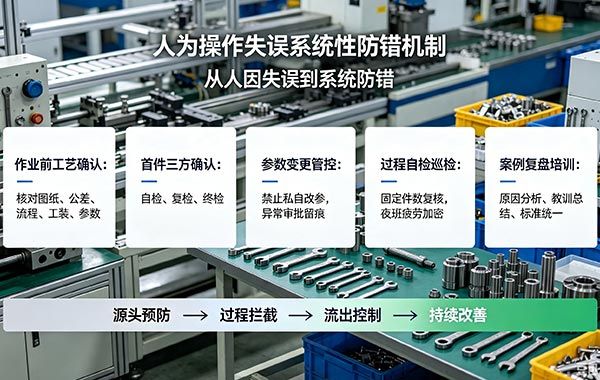
- Establish Pre-Production Process Verification:Before machining begins, operators should verify key information such as drawing dimensions, tolerance requirements, process sequences, tooling specifications, and cutting parameters. This helps prevent production from starting without proper verification or relying solely on personal experience, reducing the risk of defects caused by incorrect process interpretation or parameter selection.
- Strictly Implement First-Piece Inspection:A first-piece inspection should be performed at the beginning of each production batch and after tool changes, material changes, machine adjustments, or other operations that may affect machining conditions. The first piece should be checked by the operator and verified according to the established inspection procedure before batch production begins. This allows setup and operational deviations to be identified and corrected at an early stage.
- Strictly Control Process Parameter Changes:Cutting parameters, clamping methods, and machining sequences should follow approved process documentation and should not be changed without authorization. When special adjustments are necessary, they should be reviewed and approved by the relevant process and quality personnel in accordance with internal change-control procedures. This helps prevent unverified process changes from causing batch quality problems.
- Strengthen In-Process Self-Inspection and Quality Patrols:During production, operators should inspect critical dimensions and product appearance at specified intervals, while quality personnel conduct regular process inspections. Inspection frequency may be increased during night shifts, extended production runs, or other periods when operational errors are more likely to occur. This enables abnormalities to be identified early and prevents minor defects from developing into batch quality issues.
- Establish Defect Review and Training Mechanisms:Representative cases involving operator-related defects should be regularly collected and reviewed to identify root causes and establish appropriate corrective measures. Internal training should then be used to standardize operating practices and quality requirements. Continuous review and feedback help improve quality awareness and standardized operating practices while reducing the risk of similar problems recurring.
Human error cannot be completely eliminated, but systematic, process-based, and standardized quality controls can significantly reduce its impact on manufacturing quality and improve the consistency, stability, and controllability of machining processes.