
Mechanical components require high standards of surface integrity. Surface dents, edge damage, sharp burrs, scratches, and extrusion marks are among the most common appearance issues reported by customers. Most of these defects are not caused during machining itself, but result from insufficient deburring, improper handling, inadequate protection, friction during mixed storage, and insufficient packaging protection. These process management issues can easily lead to batch appearance defects, affecting product qualification rates and customer satisfaction.
To improve appearance quality throughout machining, handling, and transportation processes, systematic protection and control measures should be implemented as follows:
1. Standardize Deburring and Edge Treatment
All turned and milled parts must undergo chamfering, deburring, and sharp edge removal after machining to eliminate sharp edges and residual burrs. Semi-finished products with unfinished deburring shall not proceed to the next process, preventing secondary scratches and damage during handling and transportation.
2. Improve Workstation Protection
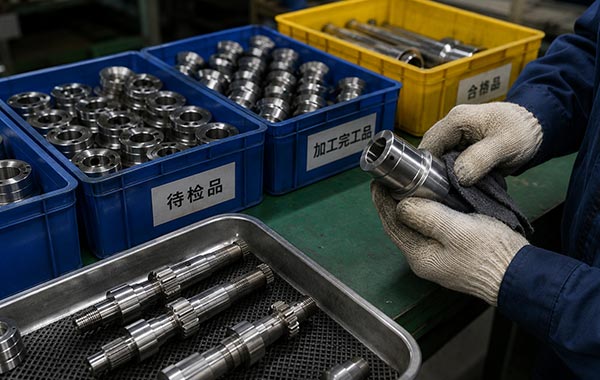
All machine workstations should be equipped with anti-scratch protective pads, and direct contact between workpieces and metal surfaces must be avoided. Semi-finished and finished products should be stored separately in dedicated turnover boxes or partitioned containers to prevent direct contact, stacking pressure, and friction between parts.
3. Standardize Handling Operations
All parts must be handled carefully during transportation. Throwing, dropping, or overturning turnover boxes is strictly prohibited. Long shafts, precision small parts, and mirror-finished components should be transported and stored separately to prevent dents and edge damage caused by mixed loading and extrusion.
4. Implement Classified Product Management
Qualified products, pending inspection products, rework products, and defective products should be clearly identified and stored separately within designated areas. Parts of different materials, specifications, or production batches must not be mixed in the same container to avoid surface scratches caused by hardness differences.
5. Strengthen Daily Appearance Inspection
Quality inspectors should regularly inspect the appearance condition of semi-finished products at each workstation and promptly correct issues such as improper placement, insufficient protection, and residual burrs. Early intervention during the production process can effectively prevent the accumulation of batch appearance defects.
Surface quality reflects a factory’s on-site management and process control capability. Through standardized operations, full-process protection, and classified management, manufacturers can effectively improve appearance consistency and reduce the risk of dents, scratches, and burr-related defects.