
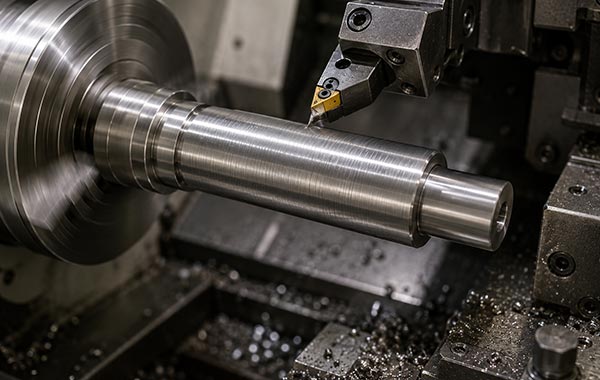
During CNC turning, vibration within the machining system can produce periodic chatter marks on the workpiece surface. These marks not only reduce dimensional accuracy and surface finish but also accelerate tool wear. In severe cases, excessive vibration may even affect the overall stability of the machine tool.
- Improve System Rigidity
- Optimize Workpiece Clamping: For thin-walled components, use soft jaws to increase the clamping contact area and minimize deformation or loosening. For long shaft-type workpieces, support the workpiece with a tailstock center to reduce overhang and improve rigidity.
- Increase Tooling System Rigidity: Select short and rigid tool holders whenever possible to minimize tool overhang. Carbide tool holders are recommended for their superior vibration resistance and higher machining stability.
- Suppress Vibration Sources
- Optimize Cutting Parameters: Adjust cutting speed, feed rate, and depth of cut according to actual machining conditions to avoid resonance. During finishing operations, reducing the depth of cut can help minimize cutting force fluctuations and improve surface quality.
- Use Anti-Vibration Tooling: Apply anti-vibration tool holders or damped tooling systems to suppress self-excited vibration and improve machining stability.
- Maintain Machine Tools and Workholding Equipment
- Inspect Machine Condition: Regularly check spindle clearance, guideway lubrication, and turret clamping conditions to eliminate vibration caused by machine wear or insufficient maintenance.
- Maintain Workholding Devices: Ensure that chucks, tailstock centers, and other workholding components are free from looseness and excessive wear to maintain stable machining performance.
- Keep Cutting Tools in Good Condition
Inspect cutting inserts regularly and replace worn or chipped inserts promptly. Excessive insert wear or damaged cutting edges increase cutting resistance, induce machining vibration, and negatively affect surface finish.
Chatter marks are typically caused by a combination of factors, including machine rigidity, tooling, workpiece stability, and cutting parameters. By improving system rigidity, optimizing cutting conditions, maintaining machine tools properly, and ensuring cutting tools remain in good condition, manufacturers can effectively minimize chatter marks, improve machining quality, and enhance overall production stability.